- Home
- Blog
- Drainage Problems in Central Indiana: How to Protect Your Yard, Foundation, and Landscape Investment
Drainage Problems in Central Indiana: How to Protect Your Yard, Foundation, and Landscape Investment
Drainage problems in Central Indiana threaten yards and foundations. Discover how to identify and fix these issues to protect your home and landscape.
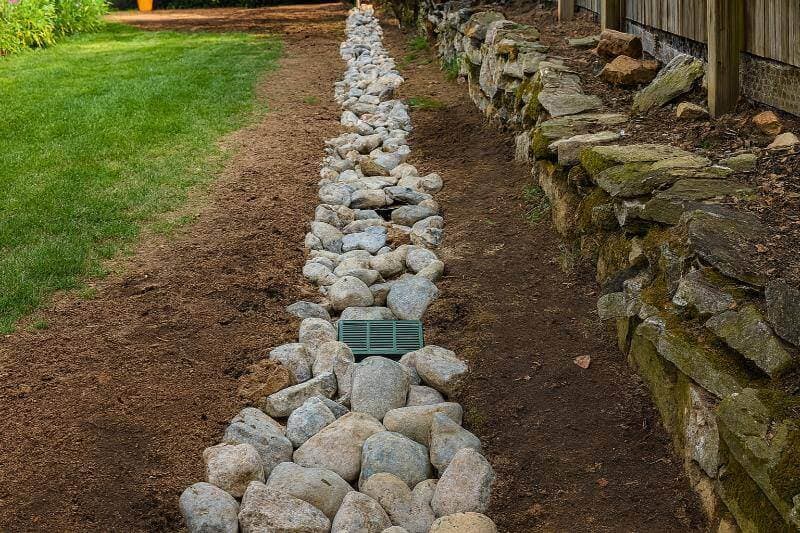
One of the most common and costly problems on the property of most Fishers, Carmel, Westfield, Noblesville and Indianapolis area home owners is drainage problems.
Water problems in central Indiana come in many different forms, caused by heavy spring rainfall, poorly draining clay soils and the repetitive freeze-thaw cycle that afflict the region. Problems can also often remain unnoticed until significant damage to yard, structural elements or other outside structures occur.
If you are noticing that water is starting to sit on your yard, more soil is staying wet, mulch around the yard is washing away and puddles of water are developing at the base of your home then the drainage system on your property may be failing.
Identifying the causes of drainage problems and how to repair them properly can save you thousands of dollars in future repairs.
Why Drainage Problems Are So Common in Central Indiana
Soil Conditions in Fishers, Carmel, Westfield and Noblesville Properties Homes in Fishers, Carmel, Westfield, and Noblesville frequently sit atop thick, dense clay soil. Water takes a long time to be absorbed through clay soil because the dense structure of the clay traps and holds the water, creating little gaps for it to flow through.
It may come as a surprise, but soils can become saturated with water in a matter of minutes during heavy rains. Water then seeks a path of steepest descent to a lower elevation, and where does water normally drain to – your foundation!
Freeze thaw occurs in the soil during the winter months and the movement of the soil as it expands and shrinks back causes the grading around the home to change and low areas or depressions develop and lead to water accumulation.
Even new construction homes can develop drainage problems after a few short years due to settling soil. What was once properly grade to direct water away from the home may now slope towards the home instead.
Drainage problems rarely fix themselves. They gradually worsen.
Many homeowners assume standing water after a storm is normal. While temporary puddles may happen during extreme rainfall, water should not remain in your yard for more than 24 to 48 hours.
Here are common warning signs:
Standing water in lawn areas
Soggy or spongy grass
Yellowing turf in low spots
Soil erosion around landscaping beds
Mulch washing into the lawn
Water pooling near your foundation
Basement moisture or musty smells
Cracked or sinking patios and walkways
If you are experiencing any of these problems at your home in Westfield, Fishers, Carmel or Noblesville, there is almost always a water-related cause.
Ignoring these signs can lead to structural damage over time.
How Poor Drainage Affects Your Home and Landscape
Drainage problems are often thought of as a nuisance, a minor cosmetic flaw that can be overlooked. But it’s often not just your lawn that’s affected. Water can pour into your home, destroy gardens and landscaping, cause sidewalks to erode and damage the foundation of buildings.
Foundation Damage
We get asked this a lot. Why is my basement leaking water if there is no visible blockage? Essentially when water sits in one area in front of your home, it creates hydrostatic pressure against the side of your home foundation walls. Eventually, this pressure creates a pathway for water to enter through cracks or severe leaks in your home’s structure.
Foundation repairs are significantly more expensive than correcting drainage early.
Lawn and Plant Health
Grass roots, as well as grass blades, require oxygen and water. Roots will suffocate and die if the soil remains saturated. This can lead to weak and thin turf, as well as overgrowth of weeds.
Landscape plants may also struggle or die in consistently wet conditions.
Hardscape Damage
These structures need a solid, compacted footing of solid concrete. When water infiltrates underneath, there can be future shifting and/or settling. That is when problems such as uneven pavers, cracks or a leaning structure may occur.
Mosquito and Pest Problems
Standing water in your yard provides the perfect breeding site for mosquitoes and other pests, creating a nuisance to your outdoor living space.
Addressing drainage issues protects both your investment and your quality of life.
What Causes Drainage Problems?
There is rarely just one cause of drainage problems. Most properties have a unique mix of factors that can cause drainage problems. Here are a few of the most common:
Improper grading during construction
Clogged or undersized downspouts
Short downspout discharge locations
Compacted clay soil
Low spots created by settling
Neighboring properties draining toward yours
Inadequate stormwater planning
The first step in truly solving the issue is to understand where the water is coming from.
Professional Drainage Solutions That Actually Work
All sites are unique. Your drain requirements will be dictated by your soil, topography and the source and extent of the problem.
Here are common professional drainage systems used in Central Indiana.
French Drains
A French drain is a trench filled with stone and a drain, which collects and directs water away from specific areas. They are often used in yards with standing water or with running water that is travelling towards the home.
Basic Elements Of A French Drain Installing a French drain correctly requires excavation, gravel, perforated pipe, fabric wrap and a discharge point so that the water is properly directed away from the home and yard.
Downspout Extensions
Water drains poorly from a variety of areas, beginning with the roofline. Downspouts need to drain the water far enough away from a home to prevent the soil from becoming saturated.
A common remedy for puddles around the downspout is to run the downspout out into the yard. Typically this involves taking the downspout down underground to a pop-up emitter or drainage outlet.
Catch Basins
Catch basins are surface drains located in low lying areas of a yard to collect water and direct it to underground sewer lines. Catch basins are very effective where water tends to collect.
Grading Corrections
This is often the most critical part of keeping water away from the home. Proper grading allows water to flow in a natural way instead of having to be forced away.
Dry Creek Beds
Dry creek beds are a very functional way to manage drainage in your yard while also creating a beautiful landscape feature. They are a great way to direct water while also improving the beauty of your property.
The installation of drainage systems is very important to the overall longevity of the drainage system. If installed too shallow, with incorrect slopes, or with inadequate compaction the drainage system is bound to fail.
Why DIY Drainage Fixes Often Fail
The most common mistake made by homeowners is that they will put soil in low areas and make shallow cuts in the lawn to attempt to alleviate the problem. These remedies do nothing to correct the source of the problem.
Common DIY mistakes include:
Incorrect slope calculations
Using improper pipe materials
Failing to wrap systems in filter fabric
Not providing a proper discharge point
Underestimating soil compaction
Without proper installation techniques, drainage systems clog, collapse, or back up.
For a system that performs reliably year after year—through the cold winters, warm summers and occasional storms that roll through Indiana—you will need a professional installation.
The Importance of Proper Planning
Drainage is not just about digging a ditch. It is a holistic approach to the whole of your land.
When evaluating drainage in neighborhoods across Fishers, Carmel, Westfield and Noblesville, the following items should be considered:
Roof runoff volume
Soil composition
Existing slope
Neighboring property elevations
Local water table conditions
All drainage plans are engineered to rapidly drain water away from the property while at the same time protecting the considerable investment made in planting, paved and stone work areas.
When Is the Best Time to Fix Drainage Issues?
The best time to address your drainage issue is before there is any structural damage. However, if you are already noticing issues such as standing water or foundation moisture, it is time to take action. The sooner you address these issues, the less you will have to pay to have them corrected.
Drainage work can be carried out during a large part of the year except when the ground is too frozen to dig.
Spring and summer are popular seasons for drainage corrections because problems are most visible during heavy rainfall.
Long-Term Benefits of Professional Drainage Installation
Investing in proper drainage does more than eliminate puddles.
It protects your foundation
Improves lawn health
Prevents erosion
Extends the life of patios and retaining walls
Reduces pest issues
Increases property value
This and every home in competitive markets like Carmel and Fishers require proper care to the exterior to ensure all the dollars invested are there to stay long term in increased value to the property. Proper care and continued structural integrity is necessary to enhance curb appeal.
Protecting Your Investment in Central Indiana
Chances are your home is one of your largest investments. A minor drainage issue can quickly develop into a more significant problem.
Do you live in Fishers, Carmel, Westfield, Noblesville or in or around Indianapolis and are concerned with drainage? It is crucial to diagnose issues as early as possible as weeks or even months of unforeseen repairs could save thousands of dollars.
Water follows gravity. We attempt to control its path.
Is your yard flooding after a storm? Do you have sinking or uneven ground? Do you have drains that have clogged or are not functioning properly? Professionally installed drainage systems provide long lasting stability to your property, preserve your landscaping and give you peace of mind during a storm.
Does your yard have drainage issues? Noticing yard drainage issues is a good start, but assessing those issues requires professionals. Your yard is a unique mixture of topography, soil type and other factors and only a licensed professional can properly assess the drainage dynamics specific to your yard.
Address the water now — before it becomes a foundation issue later.